What determines the CEO board relationship you actually get?
The CEO board relationship you design determines the value your board delivers. Passive boards, rubber-stamping decisions, and wasted director talent all trace back to one source: the inputs, agenda, and trust the CEO builds. Change the CEO board relationship, and the board changes with it.
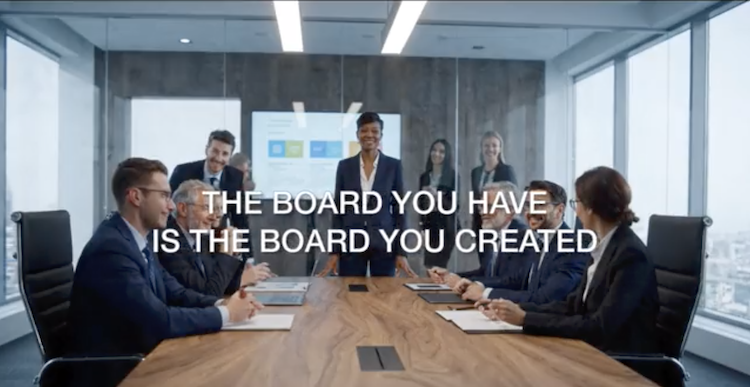
Why is the board you have the board you created?
Governance expert Matt Fullbrook puts it plainly. The CEO and executive team are the board’s primary information source. They set the agenda. They frame the questions. They control the inputs.
If your directors look passive, examine what you are feeding them. If they drift into operational detail, look at where the agenda starts. If they rubber-stamp, look at the choices you brought to the room.
The board does not arrive fully formed. You design the relationship. Most CEOs forget this. They wait for their directors to read minds.
A useful frame comes from Dr Mark Bregman. He compares a good board to a PhD advisor. The student knows more about the topic. The advisor brings perspective, sharper questions, and tests assumptions. Bring your board the art of the possible. Do not bring them safe budgets and ask for a tick.
What separates a low-value board from a high-value one?
| What the CEO does | Low-value board | High-value board |
|---|---|---|
| Board pack timing | Sent the night before | Distributed 7 to 14 days ahead |
| Meeting format | 60-slide presentation | 10 slides, 80% discussion |
| Surprises | Major issues land in the room | Pre-board calls. No surprises |
| Information quality | Curated and optimistic | Honest. Includes what is not working |
| Strategy work | Baked decisions for sign-off | Options A, B, C debated openly |
| Time with directors | Under 15 minutes alone per year | Pre-board dinners and one-to-ones |
| Director focus | Operational detail | Three decisions, two risks, one opportunity |
How do you stop rubber-stamping and start co-creating?
A. G. Lafley faced one of the biggest decisions of his time as CEO of Procter & Gamble. He had to decide on a controversial outsourcing move. The easy path was to bring one polished proposal. He chose differently.
He had three internal management teams build the strongest possible case for options A, B, and C. Each team presented to the board. Directors put each option through Q&A. Every assumption was stress-tested. The result was sharper advice and absolute alignment on the final decision.
This is what governance experts call a Level 3 board. The board and the executive team operate as entrepreneurial partners. The CEO does not arrive with the answer. The CEO arrives with the work.
The lesson is simple. If you only present go or no-go decisions, you stifle the value the board can add. Bring sticky problems early. Let directors help shape the choices.
What does radical transparency look like in the boardroom?
Roger Gray took on the CEO role at Port of Auckland during a crisis. A major automation project was failing. Costs were spiralling. The board was new. The temptation to filter the bad news was real.
Gray did the opposite. He invited the new Chair, Jan Dawson, to sit beside him in deep-dive reviews. They listened directly to the vendors. They spoke to operations staff. They saw the unvarnished reality together.
That shared exposure built trust at speed. CEO and Chair came to the same conclusion. The project was beyond saving. They cancelled it. The decision wrote off £65 million in software costs alone. It was the right call.
Boards cannot act as strategic allies if they only see the polished version. Strip away the gloss. Show what is working. Show what is not. Then ask for help.
How do you turn a threat into a strategic asset?
In 2017, Kraft Heinz launched a takeover bid for Unilever. Most boards would have moved straight into pure defence mode. Unilever did something more useful.
The board and executive team treated the threat as a learning event. They examined their vulnerabilities together. They streamlined the portfolio. They doubled down on sustainable brands and stakeholder trust.
The bid failed. More importantly, Unilever came out of the experience stronger. The board’s foresight met the executive team’s insight. The combination produced a more resilient business.
Foresight is what your board brings. Insight is what you bring. Most CEOs treat board meetings as one-way reporting. Directors with global experience and pattern recognition sit there with little to do. Pull them in earlier. Use them on the questions where their distance from the business is an asset.
What practical changes deliver value in the next 90 days?
Three timed steps will move the needle quickly. None of them require a budget.
Within 30 days. Send the next board pack 7 to 14 days before the meeting. Cap operational sections at four slides or two sides of A4. Add a CEO cover memo of 2 to 5 pages. Include one section called “What keeps me awake at night.”
Within 60 days. Make pre-board calls standard practice. Walk each director through the good, the bad, and the ugly before the formal meeting. Reduce in-meeting slides to ten. Aim for 80 per cent of the time in active discussion. Frame each meeting around three decisions, two risks, and one opportunity.
Within 90 days. Run a pre-mortem before your annual strategy day. Ask each director to name two or three priorities they believe will matter most over the next five years. Use their answers to set the agenda. Schedule a pre-board dinner. Invite a few rising stars. The board sees the talent pipeline. You build informal trust.
These changes cost almost nothing. They take CEO discipline, not a budget line.
Director’s FAQ
How early should the board pack be distributed before a meeting?
Best practice is 7 to 14 days before the meeting. At minimum, send it 3 to 5 days ahead. Directors juggle other roles. They need time to read, reflect, and prepare questions. A CEO spends around 3,500 hours a year working with company information. A non-executive director gets roughly 215 hours. Quality preparation closes that gap. Sending the pack the night before guarantees a low-value meeting.
What goes in a CEO board report that actually drives value?
Keep it to 2 to 5 pages. Use a structured narrative: what is going well, what is not, what you are excited about, what keeps you awake at night, and exactly what help you need from the board. Avoid the polished good-news story. Directors cannot help if you hide the bad news. Answer the “so what?” question on every report.
How do I stop the board from drifting into operational territory?
Place strategy at the start of the agenda. Cognitive bandwidth is highest at the opening. Push items “for noting” to the end. Distil each meeting into three decisions, two risks, and one opportunity. Treat operational reporting as pre-read material. Use the boardroom for debate. If directors wade into operations, it usually means the strategic work was too vague.
What if my board is currently passive and rubber-stamping?
Look at what you are feeding them. Passive boards are usually over-fed with data and under-engaged on strategy. Bring them sticky problems before they are fully digested. Ask, “what are we missing?” Run a pre-mortem before your annual strategy day. Invite each director to name two or three priorities for the next five years. The conversation shifts quickly.
How much informal time should I spend with my directors?
More than you think. One real-life evaluation found a CEO had spent under 15 minutes alone with each director across a full year. The result was dysfunction and weak performance. Schedule pre-board dinners. Hold one-to-one calls before each meeting. Informal time builds trust faster than any formal session ever will.
Strengthen your CEO board relationship
Most CEOs do not need a bigger board. They need to get more value from the one they have. I work with B2B executive teams on board effectiveness, advisory board design, and the practical tactics that change boardroom outcomes within a quarter.
Get in touch to explore how a stronger CEO board relationship delivers measurable results.
Email: [email protected]
About the author: Seerden Board Partners advises B2B executives and boards on governance, board effectiveness, and strategic oversight. We help CEOs and directors work together to drive measurable outcomes.
This article was originally published on LinkedIn.
View the original discussion here.