How Do You Measure Culture as an Operational Variable?
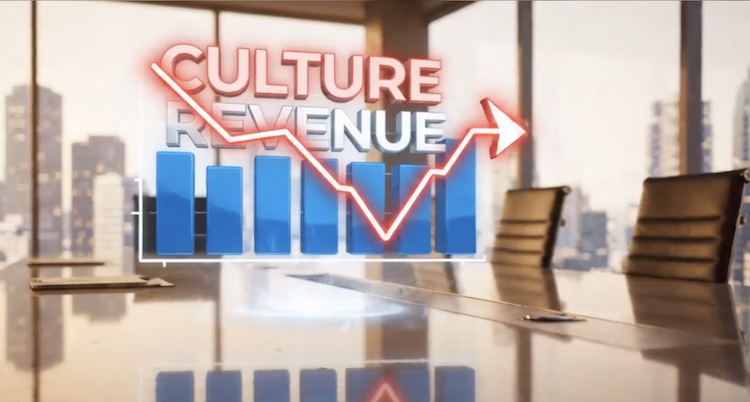
Culture is not a soft concept. It is an operational variable. And if you are not measuring culture, you are managing something you cannot see. When employee engagement drops, productivity falls months before revenue does. This means culture is a leading indicator—it tells you what is coming, not what already happened. The question is not whether culture affects your business results. It does. The question is whether you are measuring it.
Your Revenue Numbers Are Lagging Behind Your Culture
Most boards and executive teams review financial results at every meeting. Revenue, margin, pipeline, headcount. These are lagging indicators. They tell you what already happened.
Culture is a leading indicator. It tells you what is coming.
When employee engagement drops, productivity falls months before revenue does. When trust breaks down inside a leadership team, bad decisions follow. When values are not lived consistently, the people who care most tend to leave first.
The Commonwealth Bank of Australia (CBA) is a well-documented example. An independent review found a complete absence of consequence management. Executives faced no adverse consequences for violating the company’s stated values. The cultural problem existed long before the financial scandal hit. The board only acted after the damage was done, cutting its own fees by 20% and slashing a collective $100 million from executive bonuses.
Cricket Australia faced a similar moment. A formal review exposed a culture of arrogance and a win-at-all-costs mentality. The Chairman’s initial response, stating he was not embarrassed, became the headline. He resigned under public pressure days later. In both cases, a culture problem masqueraded as a governance or conduct problem. The root was the same.
Culture is measurable. And when it is not measured, it finds its own way to the surface.
How to Treat Culture as a KPI
The formula is straightforward: Culture equals values, plus behaviour, multiplied by consistency. The challenge is turning that formula into data.
Start with three core values. Define them precisely. Break them into specific, observable behaviours. A vague value like “respect” is not measurable. An operational rule for a meeting, such as “if you are not speaking, you are muted, and talking over others is a conduct issue”, is. That is the difference between a wall poster and a performance standard.
There are four tools that convert culture into numbers.
The Employee Net Promoter Score (eNPS)
This is the simplest approach. Ask one question: “On a scale of 0 to 10, how likely are you to recommend working here to a friend?” Chris Lonergan, a business owner who restructured his operations using the Entrepreneurial Operating System (EOS), tracked his eNPS quarterly. His score climbed to 88. The operational result was faster turnaround times, higher work quality, and measurably happier clients.
The Talent Density Indicator (TDI)
This adds a second dimension. Plot each team member on two axes: productivity and culture fit. A high-performing person who regularly violates values is not a high performer. They are a drain on the people around them. Calculate TDI by subtracting the percentage of low performers from the percentage of high performers. Track it quarter over quarter across departments. A rising TDI signals a healthier culture.
The Wheel of Engagement
This measures 12 specific variables: whether the organisation has a clear three-year vision, whether there is an active listening culture, and whether core values carry actual consequences and rewards. The output is visual. It shows leadership exactly where the culture is fractured, before those fractures appear in the numbers.
Values-Based Scoring
This assigns a quantifiable score, often ranging from 19 to 89, to uncover the root causes of organisational problems. Think of it as a blood test for your culture. It will not tell you the full story, but it will tell you where to look.
Southwest Airlines offers a clear illustration of how this works in practice. The company’s survival value is described internally as a “warrior spirit”. That is not a motivational phrase. It is an operational standard. It defines the speed at which employees load bags onto planes, because loading speed directly supports the low-cost commercial model. The value has a behaviour. The behaviour has a metric. The metric drives the outcome.
What Good Looks Like: Three Numbers Worth Knowing
The WD-40 Company is one of the most cited examples of culture as a business variable. Under former CEO Garry Ridge, regular employee surveys produced these results: 93% of employees were engaged, 98% said they loved telling people where they worked, and 97% explicitly trusted their managers.
Those are not soft outcomes. They are competitive advantages.
Here is a concrete story of what that looks like in practice. A WD-40 supply chain worker discovered a cheaper ingredient that could save the business $4 million per year. The new ingredient required a cancer warning label. The company’s number one value was “doing the right thing”. The employee rejected the cost saving without fear of any consequences. Culture was the operational variable that decided a $4 million financial question. No committee. No escalation. Just a clear value, lived consistently.
A retail company with over 100 people leaders measured their engagement using the Gallup Q12 survey and found a score of 37%. That is a significant risk. By diagnosing the root cause, which was inadequate technology and tools, and fixing it, the company lifted engagement to 51% within a single year. The result was the highest retention rate and the most profitable year in the company’s 38-year history.
Jay Graves, a leadership coach, took over a corporate sales team that had ranked at the bottom of its organisation for 20 years. He did not overhaul the sales tactics first. He measured the individual motivations and behavioural drivers of each team member. He built a structured culture of accountability and mission orientation. Within 12 months, the team moved from the bottom quadrant to the top.
Where to Start: A 90-Day Culture Audit
You do not need a major transformation programme to begin. Here is a practical starting point.
In the first 30 days, run an eNPS survey and a values alignment assessment. Identify your top and bottom performers on the Talent Density Index. Interview five to ten people at different levels of the organisation. Ask what gets rewarded and what gets ignored. The answers will tell you more than any strategy document.
In the next 30 days, map your stated values to actual behaviours. Identify where the gap is largest. Document the observable standards you expect. Commit to three measurable culture KPIs and report them at your next board meeting.
In the final 30 days, build accountability into the rhythm. Measure eNPS quarterly. Review TDI by department. Make culture a standing item on the executive agenda, alongside revenue and operational metrics.
Consultant Kirk Dando describes this diagnostic process as putting a leader in a flight simulator. You gather cultural and operational data from across the organisation and present it to the CEO over two days. The goal is to let them experience the company’s blind spots safely, and correct course before those issues cause a real crisis. That is exactly what good governance looks like.
A Final Thought: Culture Drives Commercials
Culture shapes every commercial outcome your business produces. It drives the decisions your people make when no one is watching. It determines whether your best talent stays or goes. And it tells the story your revenue numbers will eventually confirm.
When many executives are asked which of the 3Cs come first—Commercials, Customer, Culture—most answer “the Customer comes first”. But the customer does not come first. It is Culture. Your culture determines how your customers are being served, and your customers deliver your commercials. Let that sink in.
If your board or executive team is not treating culture as a measurable operational variable, the risk is real and growing.
Ready to Strengthen Your Board’s Oversight of Culture?
Culture is not soft. It is measurable. It is strategic. And it is the responsibility of governance to ensure your organisation is tracking it.
If you are building an advisory board or want to strengthen governance around culture measurement, I can help. Contact me directly at [email protected].
Andrew Seerden is an independent director and board advisor at Seerden Board Partners. With over 30 years of B2B leadership experience at IBM, Compaq, and Hewlett-Packard, Andrew helps boards and advisory bodies strengthen governance, oversee culture, and drive strategic growth. He is based in Auckland, New Zealand.
This article was originally published on LinkedIn.
View the original discussion here.