What is the difference between sub-committees and advisory boards?
Sub-committees sit inside formal governance. Members carry fiduciary duty and legal liability. Their job is compliance, risk, and detailed oversight. Advisory boards sit outside formal governance. Members have no voting power and no fiduciary exposure. Their job is strategy, fresh thinking, and growth. Sub-committees ask if you are doing things right. Advisory boards ask if you are doing the right things. The best-run businesses use both.
Most business owners know they need external oversight. Fewer know they have two distinct tools to get it. Both matter. Understanding the difference can shape your growth strategy.
Watchdogs vs scouts: the core difference
Picture a ship at sea. The lookout spots danger. Rocks, storms, other vessels. That role is essential. Without it, you sink.
Now picture the scout. The scout goes ahead to find opportunity. New routes. Better harbours. Fresh trade. The lookout keeps you safe. The scout helps you grow.
Sub-committees are your lookouts. Advisory boards are your scouts.
Sub-committees operate within your formal governance structure. They carry legal weight. Members have fiduciary duties. They can face liability if things go wrong. Their job is compliance, risk management, and detailed oversight.
Advisory boards sit outside formal governance. Members have no voting power. No fiduciary exposure. Their job is strategy, fresh thinking, and growth. They bring expertise without the legal constraints.
How do sub-committees actually work?
Sub-committees do the heavy lifting of governance. Industry experts call them the “workhorses of the board”. The full board cannot examine every detail. Sub-committees dig deep so the board can decide well.
Public companies must have certain committees. Audit, Compensation, and Nominating. These are non-negotiable. Private businesses can choose their structure. Many create Risk, Technology, or Responsible Business committees as challenges evolve.
Here is how they function in practice. During a severe turnaround, one company created what they called a “Chairman’s Office”. This special sub-committee met weekly during crisis periods. Quarterly board meetings were not enough. The sub-committee processed complex information quickly. It then brought focused recommendations to the full board.
The Audit Committee deserves special mention. One governance expert describes a common problem. Boards treat Audit like a kitchen junk drawer. When directors do not know where to put a new risk, like cybersecurity, they dump it in Audit. This overloads the committee with issues they lack the skills to handle.
Sub-committees work best when they stay focused. They frame options. They weigh pros and cons. They recommend. The full board decides.
One warning: recommendations can become decisions in disguise. If a board rubber-stamps committee reports without scrutiny, the committee has effectively seized control. Good governance requires active engagement, not passive approval.
Why growth advisory boards deliver different value
Advisory boards operate in a different space entirely. They provide what one business strategist calls “radar scope improvement”. Governance focuses on what is front and centre. Advisory boards scan for signals on the fringe. The unknown unknowns. The freight train you cannot yet see.
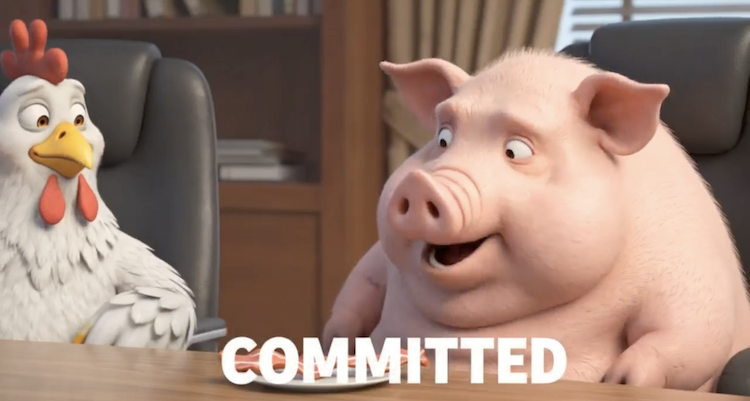
Consider the chicken and the pig discussing breakfast. The chicken contributes eggs. The pig contributes bacon. The chicken is involved. The pig is committed.
Advisory board members are chickens. They contribute insight without putting everything on the line. Sub-committee members are pigs. They have skin in the game. Both contributions matter. They just serve different purposes.
A real-world example shows this clearly. One organisation faced a complex transformation programme. They had a governance board and executive team. Both groups recognised a risk: groupthink. Everyone was too close to the strategy.
They established a project-based growth advisory board. Its job was to challenge executive thinking and test for blind spots. The advisory board provided independent perspective on change management. This gave the main governance board confidence to approve significant investments. The strategy had been rigorously road-tested by outsiders.
Advisory boards also solve a common problem: expertise gaps. Research shows many fiduciary boards lack marketing expertise. They favour finance and operations backgrounds. Restructuring the entire board is difficult and disruptive.
The answer is often a marketing-focused advisory body. Bring in customer-centric insights without disturbing the formal governance structure. The organisation gains critical market knowledge without imposing fiduciary liability on creative experts.
The Sat Nav analogy: why modern businesses need both
Patrick Dunne, a UK-based governance expert, uses a powerful comparison. In the past, boards used maps. They created annual budgets and plans. They followed the map rigidly until next year.
Today, you need a sat nav. Dynamic feedback at every junction. Real-time data about traffic, new routes, and changing conditions.
Advisory boards act like the real-time data feed. They warn of cultural shifts. They spot digital opportunities. They flag risks the old map cannot show.
Sub-committees maintain the vehicle. They ensure the brakes work. They check the engine. They verify the insurance.
You need both. A perfectly maintained car driving the wrong route wastes time. A brilliant route means nothing if the engine fails.
Sub-committee vs advisory board: side-by-side comparison
| Feature | Sub-committee | Advisory board |
|---|---|---|
| Position | Inside formal governance | Outside formal governance |
| Voting power | Yes, fiduciary | None |
| Legal liability | Members face exposure | None |
| Primary focus | Compliance, risk, oversight | Strategy, growth, fresh thinking |
| Common types | Audit, Compensation, Nominating | Marketing, Digital, Customer |
| Duration | Permanent and ongoing | Project-based, 90 days to 18 months |
| Core question | Are we doing things right? | Are we doing the right things? |
| Cost profile | Higher, formal structure | Lower, flexible |
| Best suited for | Public and mature private companies | Growth, transformation, expertise gaps |
How do you choose the right structure for your business?
The distinction shapes practical decisions. Sub-committees suit defined, recurring oversight needs. Financial reporting. Executive compensation. Risk monitoring. They work through established processes with clear boundaries.
Advisory boards suit exploration. Market entry. Digital transformation. Customer strategy. They can be pop-up structures lasting 90 days to 18 months. They dissolve when the job is done.
Some businesses start with an advisory board as a soft entry into governance. The owner gets external wisdom without sharing control. The advice is not mandatory to follow. This builds comfort with outside input before creating formal structures.
As businesses mature, the balance shifts. Venture-backed startups often begin with small investor boards. Before going public, they must add independent directors and formal committees. The advisory mindset becomes formal governance.
Many private businesses benefit from a hybrid approach. One company organised their board around individual expertise rather than formal sub-committees. One member focused on marketing and sales. Another on IT architecture. A third on finance and strategy. They covered 90 percent of challenges without heavy bureaucracy.
What this means for your business
If your business lacks external perspective, start somewhere. An advisory board costs less and carries less legal complexity. It tests whether outside input adds value for your specific situation.
If you already have governance structures, audit their focus. Are sub-committees overloaded? Are they tackling growth questions they were not designed to answer? A growth advisory board might provide the strategic space your sub-committees need.
The best-run businesses use both structures well. Sub-committees protect. Advisory boards propel. Lookouts and scouts. Chickens and pigs. Each role matters.
Director’s FAQ
When should a private company use a sub-committee instead of an advisory board?
Use a sub-committee when oversight is recurring, formal, and detailed. Audit, risk, and compensation are typical. Use an advisory board when the need is strategic, exploratory, or time-bound. Many private companies start with an advisory board and add sub-committees as the business matures.
Do advisory board members face legal liability?
No. Advisory board members have no voting power and no fiduciary duty. That is the core distinction from sub-committee members. Advisors give counsel; they do not direct the company. This lets the business attract senior expertise that might otherwise decline a formal director seat.
How long should an advisory board run?
It depends on the brief. Project-based advisory boards run 90 days to 18 months. They dissolve when the job is done. Standing advisory boards run indefinitely with rotating members. Set a clear charter at the start, including duration and review points.
Can a business use sub-committees and an advisory board at the same time?
Yes. The best-run businesses use both. Sub-committees handle compliance and risk inside formal governance. The advisory board scans for opportunity outside it. The two structures complement each other rather than compete.
What is the cost difference between sub-committees and advisory boards?
Sub-committees are funded inside the formal governance budget and carry director-level fees plus liability insurance. Advisory boards run on retainer or project fees, typically 50 to 70 percent below the cost of a full-time executive equivalent. Annual investment for a structured advisory board often sits between NZD 40,000 and NZD 70,000.
Talk to Seerden Board Partners
Andrew Seerden is the founder of Seerden Board Partners, a B2B board and governance advisory practice based in Auckland. He advises business owners and executives on governance, board effectiveness, and growth. If you are weighing whether a sub-committee, an advisory board, or both would strengthen your business, he welcomes a conversation. Reach him at [email protected].
This article was originally published on LinkedIn.
View the original discussion here.