Why is a risk register no longer enough to govern through disruption?
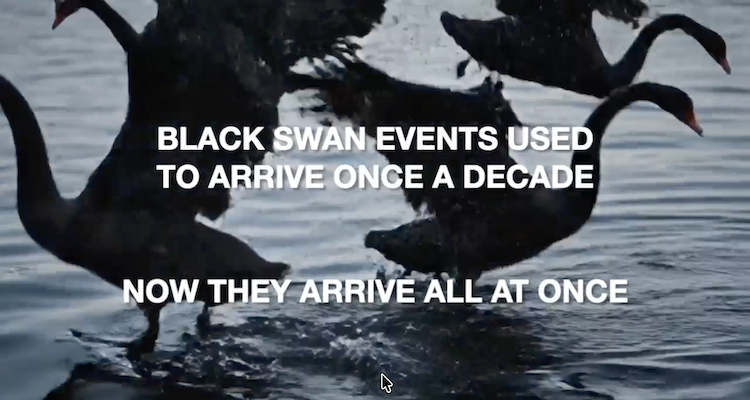
A risk register tracks what is already visible. It does not stress-test what could break the business when several shocks land at the same time. Directors are turning to advisory boards to fill that gap. One chair coined a phrase for this new normal: “swan stacking”, where multiple high-impact events such as pandemics, geopolitical upheaval, supply chain collapse, AI disruption, and trade wars hit in the same window. Advisory boards run the wargames a governance board cannot. They build muscle memory before the crisis arrives. They protect the main board from being overwhelmed when several swans land together.
The supporting numbers point in one direction. Research indicates governance boards spend up to 75% of their time on compliance. That leaves almost no bandwidth for foresight. Companies with active advisory boards report a 24% increase in annual sales and an 18% lift in productivity. Since 2019, advisory board adoption has grown 52%. External strategic guidance matters more now than at any point in recent memory.
From hindsight to foresight: the wargaming mindset
Traditional risk management looks backwards. Wargaming looks forward. The difference often determines survival.
Larry Summers captured this during the 2008 financial crisis. He served as Director of the National Economic Council under President Obama. His observation: “economic time stopped, but financial time didn’t.” Revenue can hit zero overnight. Bills and debt keep ticking. Wargaming simulates exactly this disconnect. How long does the business survive when income stops but expenses continue?
This does not mean planning for every conceivable disaster. In Armageddon, NASA sends oil drillers to blow up an asteroid. It makes for great cinema. Boards should not waste resources on a “Bruce Willis Exploding Asteroid Plan” for every improbable event. Focus instead on what Donald Rumsfeld called “known unknowns”, the vulnerabilities a board can identify and stress-test.
Sometimes the strongest wargame is codifying values. When Johnson & Johnson faced the Tylenol poisoning crisis, they did not need a 500-page manual. Their Credo acted as a pre-decided scenario plan. It dictated the immediate product pull, regardless of cost. Values should hold up under financial pressure. Test them.
Blackberry offers the cautionary opposite. In the mid-2000s they dominated mobile phones globally. Their board failed the duty of foresight. They never wargamed the threat from Apple and Android. Market share disappeared within years. The failure was governance, not technology.
How do advisory boards become your red team?
Governance boards carry legal liability. They focus on compliance, the lookout function. Advisory boards operate differently. They act as scouts and red teams, testing boundaries without fiduciary constraints.
Consider the subterranean structure. Wargaming often demands deep technical dives a main board cannot run inside its regular meetings. Examples include a biased AI algorithm, or a primary supplier suffering a security breach. An advisory board does this heavy lifting. They explore options and present validated recommendations. The governance board then receives an auditable link to a defensible decision.
Think of it as road testing versus decision making. Crash the car in the simulator, not on the highway. An advisory board lets management present a strategy, say entering a new market, and have independent experts try to break it. The governance board then makes the binding call on the refined approach.
Governance boards also face boardroom black ice, dangers invisible until you hit them. Groupthink. The bandwagon sin where everyone agrees just to move on. An independent advisory board spots black ice during scenario planning. They sit outside the internal social hierarchy. They see what insiders cannot.
The Gucci story illustrates the point. The fashion house recognised that its main board, mostly older men, was losing touch with customers. They created a shadow board of younger employees who reviewed the same board papers. This advisory group challenged the main board directly. The insight pushed Gucci to invest early in digital. They outperformed peers significantly over the following five years.
Static risk register vs wargaming approach: what is the difference?
The contrast helps directors decide where each tool fits in the oversight model.
| Dimension | Static risk register | Wargaming approach |
|---|---|---|
| Time orientation | Backward-looking, captures known risks | Forward-looking, tests unknown combinations |
| Trigger | Updated annually or after incidents | Stress-tests a specific threat or opportunity on demand |
| Output | A list of risks with likelihood and impact ratings | A rehearsed response and a defensible decision pathway |
| Owner | Compliance, audit, internal risk | Project advisory board with independent experts |
| Where it fails | Cannot model concurrent shocks or second-order effects | Requires real expertise and disciplined facilitation |
| Where it wins | Provides audit trail and regulatory comfort | Delivers speed and clarity when multiple disruptions land at once |
Real stories of wargaming in action
A family office in the Middle East wanted to invest in a European automotive distribution brand. The emotional pull was prestige. They established a project-based advisory board to stress-test the business case. The advisors brought specific automotive expertise. They challenged every assumption. The wargame revealed uncomfortable truths. The investment horizon was much longer than expected. Potential losses were higher than anticipated. The advisory board, in the chair’s words, “saved the family from breaking down” by turning an emotional decision into a fact-based one. They invested, but with eyes open and on different terms.
A $2 billion government research entity needed to decide where to place bets for future health outcomes. They created two advisory boards, one scientific, one commercial, and ran a moonshot workshop. The advisory board identified indoor air quality as a critical future health vector before it became a mainstream post-COVID priority. Their internal teams had missed it.
A large US technology business received an unsolicited takeover offer. Rather than distracting the main board, they created a crisis project advisory board. This group handled the offer, analysed strategic implications, and advised the executive team. The main board continued overseeing normal operations. Business as usual stayed separate from crisis response.
The Castore sportswear brand provides a creative example. They wanted to sponsor tennis star Andy Murray. The contract required a multimillion-pound payout if Murray won a Grand Slam. That scenario would bankrupt the young company. The board checked the betting odds. They were 50-1 or 75-1 against Murray winning. The solution: they placed a £10,000 bet on Murray to win. If he lost, the company lost £10,000, an acceptable cost. If he won, the winnings would cover the payout. Entrepreneurial thinking applied to hedge a specific financial scenario.
The SolarWinds hack shows that risks come from unexpected directions. Hackers entered through a vulnerability in an accountancy software provider, not SolarWinds directly. Boards must wargame scenarios where suppliers are compromised.
One retailer crushed an abandoned car in their lot without following legal process. The car belonged to a customer who had suffered a heart attack in the store weeks earlier. Process failures in sensitive situations create scenarios boards must consider before they happen, not after.
A tech subsidiary of an energy company used an advisory board for a high-stakes strategy. They wanted to annoy market leaders to force an acquisition. The advisory board guided a strategy of acquiring smaller players. Over four years, they exited at five times the valuation. The advisors turned over three times to match each stage of the company’s growth.
When the pandemic hit, a company in the events industry saw its business collapse as offline events became illegal overnight. The board did not just monitor losses. They wargamed a new reality. They pivoted the entire model to online formats. The company finished the crisis year with better financial results than the year before.
A furniture manufacturer fell into default and could not service its loans. A banker proposed a custom board with bank representatives holding veto power. This “ambulance” board managed the crisis and restructured the company. Within 24 months, the manufacturer became an exclusive supplier to Western European markets.
How do you build wargaming capability?
The typical investment for an effective advisory board ranges from $40,000 to $70,000 NZD per year. That delivers C-level expertise at 50 to 70% less than executive hiring costs. Research indicates 77% of organisations report positive outcomes from their advisory boards.
Start with three checks. First, whether a project advisory board is in place to wargame specific threats so the main board is not overwhelmed. Second, whether the business has stress-tested survival if revenue hits zero while costs continue. Third, whether the board has scouts looking for opportunities, not just lookouts watching for rocks.
Cybersecurity experts describe their work as an infinite game. The defenders need to be lucky all the time. Bad actors only need to be lucky once. Boards must prepare to fail. Not planning to lose, but accepting that disruption will happen, and having plans ready to cope rather than assuming defences will hold forever.
Directors should hold one test in mind. The successors will judge whether the board acted with foresight for the future, or self-interest for the present.
Director’s FAQ
What is swan stacking?
Swan stacking is the term used when several high-impact, low-frequency events occur at the same time. A pandemic, a geopolitical shock, a supply chain failure, and an AI disruption may all hit within the same period. It places severe stress on governance because directors lose the option of dealing with one issue at a time.
How does an advisory board differ from a governance board for scenario planning?
A governance board carries fiduciary duty and legal liability. Its focus is oversight, compliance, and binding decisions. An advisory board has no fiduciary obligation. It can run wargames, stress-test strategy, and present validated options. The governance board then makes the final call on the refined plan.
What does it mean for a board to wargame a scenario?
Wargaming is structured stress-testing of a specific threat or opportunity. The board defines a scenario, walks through second-order effects, identifies decision points, and rehearses responses. The output is a defensible decision pathway, not a list of risks.
How much should a business invest in an advisory board?
A typical effective advisory board costs $40,000 to $70,000 NZD per year in New Zealand. That brings C-level governance and commercial expertise at roughly half the cost of an equivalent executive hire. Research indicates 77% of organisations report positive outcomes from advisory boards.
What signs suggest a business needs to wargame more than it currently does?
Three signals stand out. The board spends almost all its time on compliance and management reports. The risk register has not been linked to a real strategic stress test in twelve months. And no one in the room can answer how long the business survives if revenue stops while costs continue.
Ready to stress-test your business against multiple disruptions?
Whether the task is establishing a first advisory board or strengthening an existing one, the principles hold. Structure matters. Independence matters. The right people in the right seats for the chapter the business is in.
Seerden Board Partners works with B2B businesses and their boards on advisory board design, chair effectiveness, and commercial growth oversight. To discuss how an advisory board could help the business handle swan stacking, write to [email protected].
Andrew Seerden is the founder of Seerden Board Partners, an Auckland-based board advisory practice working across New Zealand and internationally. He brings more than thirty years of senior commercial leadership at IBM, Compaq, and Hewlett-Packard, and eleven years chairing StarJam Trust. He holds an MBA from Newport University Utrecht. He works with boards and CEOs on advisory board design, chair effectiveness, and commercial growth oversight.
This article was originally published on LinkedIn.
View the original discussion here.