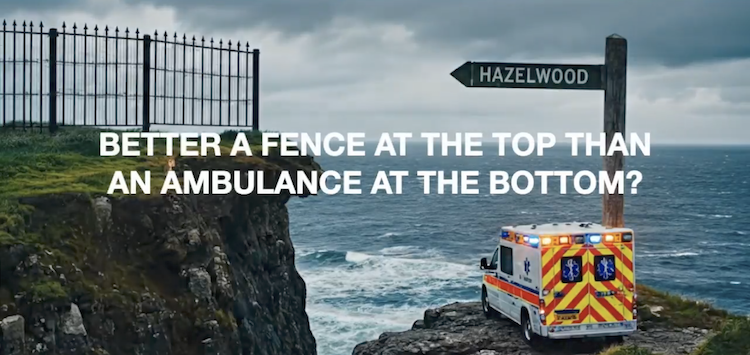
Is Your Advisory Board a Fence or an Ambulance?
Most business leaders understand a simple principle: better to prevent a crisis than manage one after the fact. Yet when it comes to governance, they wait until their company is bleeding before seeking help. They call in advisors after the crash, not before. Proactive boards act as fences at the top of the cliff. Reactive boards become ambulances at the bottom. The timing of your governance determines whether your business thrives or merely survives.
The Wrong Hazelwood Problem
A couple tells a story that every executive should hear. They once drove to a wedding in Hazelwood, England. They left on time. They followed the map. They arrived precisely when planned.
There was just one problem. They were in the wrong Hazelwood, 150 miles from their destination.
The couple had executed flawlessly. The flight, the car rental, the timing. Everything worked perfectly except the destination itself. You can get 999 things right. Miss one critical piece of information, and the entire effort fails.
This is what happens when businesses lack strategic advisory oversight. The executive team works hard. They execute with precision. They hit their targets. Then they discover they have been driving toward the wrong destination for years.
A Growth Advisory Board acts as the navigator who checks the map before the trip starts. It ensures the company is not driving efficiently toward disaster.
The Scout and The Lookout
Traditional governance boards act as Lookouts. They scan for immediate danger. They watch for compliance risks. They keep the ship off the rocks.
This is necessary work. But it is not enough.
A Growth Advisory Board acts as the Scout. The Scout ranges ahead into uncertainty. The Scout finds commercial opportunities that the Lookout cannot see. The Scout spots weak signals on the periphery before they become obvious threats.
This can be best described as extending your radar scope. The future is already here. It is just out there on the fringe. Your internal team often suffers from tunnel vision. They focus on clear and present dangers. An Advisory Board detects threats and opportunities that have not arrived yet but are coming fast.
If your business relies only on Lookouts, you may be safe but stagnant. The Scout ensures you find the path to growth.
The Trim Tab Effect
Buckminster “Bucky” Fuller, a prolific 20th-century American inventor, architect, systems theorist, author, and futurist, used a beautiful analogy about ship steering. A large ocean liner has a massive rudder. That rudder has a tiny rudder attached to it called a trim tab.
When you move the trim tab slightly, it creates a low pressure area behind the main rudder. The large rudder then moves with minimal effort. A small adjustment at the right moment steers a massive vessel.
An effective Growth Advisory Board works as a trim tab. It does not wrestle the steering wheel from the CEO. It applies small strategic pressure early. This prevents the need for drastic emergency turns later.
The alternative is waiting until the ship heads directly for rocks. Then you need violent course corrections. Sometimes the rocks win.
When Advisory Boards Fail
The data reveals a troubling pattern. For organisations where Advisory Boards delivered negative impact, the primary driver was a cash flow crisis.
This makes sense when you understand what Advisory Boards actually do. They provide strategic thinking over time. They challenge assumptions. They open networks and opportunities. They build decision-making confidence.
None of these functions work as emergency surgery.
New York-based entrepreneur Louis Gagnon learned this lesson painfully. Early in his career, he viewed Advisory Boards as “pretty pictures to put on my PowerPoint to impress my investors.” The board was a vanity project, not a strategic asset.
When the dotcom crash hit, his company had no Plan B. An $80 million buyout offer evaporated. He reflects that a proper Chair and structured board might have helped him handle the crisis differently. But by then, the fence was never built. The ambulance arrived too late. Louis is now a Certified Advisory Board Chair.
The Conversation Flow Principle
An advisor once drew a simple chart for a CEO. The drawing showed that Conversation Flow predicts Cash Flow. The CEO paid $200 on the spot for that sketch. It illustrated something profound about governance.
When the quality and rhythm of board conversations stay high, cash flow remains healthy. The board becomes the fence that maintains strategic clarity.
When conversation flow breaks down, cash flow eventually crashes. By then, you need the ambulance.
This means financial health is a lagging indicator of board quality. Problems visible in the numbers today started in governance conversations months or years ago.
The Tylenol Test
In 1982, someone poisoned bottles of Tylenol in Chicago. Seven people died. Johnson and Johnson faced an existential crisis.
The company did not need to invent a response on the spot. They had something better than a crisis plan. They had the Credo, a 1943 foundational document serving as the company’s “moral compass”.
Years earlier, the board established organisational values that guided every decision. This pre-built fence allowed the CEO to make an immediate choice: pull every bottle from every shelf nationwide. The cost was enormous. The brand survived.
The Credo was the fence at the top of the cliff. It prevented a crisis from becoming a catastrophe.
The 70/30 Problem
Research shows most boards spend 70% of their time on hindsight and oversight. They review reports. They check compliance. They analyse what already happened.
Only 30% of board time goes to foresight. Strategy. The future.
This ratio creates a fundamental problem. Boards become rear-view mirrors when they should be headlights.
An effective Growth Advisory Board reverses this ratio. It invests 70% of its time in the future. Where do we want to be in five years? Who will get us there? What threats are forming on the horizon? What opportunities are we missing?
Hindsight boards become ambulances by default. They spend their time understanding past accidents rather than preventing future ones.
Real Cases, Real Consequences
Consider these contrasting examples.
Boeing’s board failed to identify the trade-off between safety and profits within operating culture. They did not detect the cultural problems early. The result was catastrophic loss of life and reputation.
Wells Fargo’s directors had no understanding of what happened at branch level. Employees broke laws to meet targets. The lack of deep cultural understanding led to massive legal cleanup.
Compare these with Walmart. Their board recognised the average director age was 62. They lacked digital expertise. Amazon was eating their lunch. The board acted as a fence by bringing in three directors in their 40s with digital skills. They built expertise before obsolescence arrived.
Mars anticipated future consumer concerns about supply chains. They proactively invested in cocoa farmer welfare in West Africa. This fence prevented future reputational damage and supply chain collapse.
The difference between these outcomes was timing. Some boards built fences. Others called ambulances.
Proactive vs Reactive Governance: Fence or Ambulance
| Dimension | Fence (Proactive Board) | Ambulance (Reactive Board) |
|---|---|---|
| Timing of Involvement | Established during growth phase, before crisis | Brought in during or after emergency |
| Primary Function | Strategic foresight and prevention | Crisis management and cleanup |
| Board Time Allocation | 70% future strategy, 30% oversight | 70% hindsight, 30% foresight |
| Advisory Value | Challenge assumptions, open networks, build confidence | Problem-solving under pressure |
| Business Outcome | Prevents wrong-destination scenarios | Responds after cliff edge is hit |
| Effectiveness Window | 12-24 months to measurable impact | Weeks or months, pressure-driven results |
| Cost Profile | Structured, planned investment | Emergency spending, often higher total cost |
Building Your Fence
The data supports proactive governance. Businesses with strong advisory structures report a 30% increase in decision-making confidence. Companies with strong digital governance see 38% higher revenue growth and 1.5x increased market capitalisation.
If you wait until you need an ambulance, the advisory structure is often too slow to save the patient. Advisory boards work through relationships, challenge, and strategic thinking. These processes require time to deliver results.
The question is not whether you need governance support. The question is whether you build the fence now or call the ambulance later.
Director’s FAQ: Growth Advisory Boards
When should a business establish its first growth advisory board?
The best time is during growth or stability, not crisis. Ideally, establish your board when revenue is climbing and you have capacity to invest in strategic thinking. This allows the board to shape your next chapter rather than salvage what remains. Waiting until cash flow breaks down limits what an advisory board can accomplish.
What is the practical difference between a governance board and a growth advisory board?
A governance board provides fiduciary oversight and compliance. A Growth Advisory Board provides strategic challenge, external perspective, and network access. Many businesses need both. The governance board protects you from the rocks. The advisory board helps you navigate toward opportunity. Neither is optional in mature businesses.
Can a growth advisory board really prevent business failure?
Not directly, but it can prevent you from driving toward the wrong destination. The Hazelwood story illustrates this: perfect execution toward the wrong goal still fails. An effective board detects wrong-destination scenarios early, when course correction is still possible. This is why conversation flow predicts cash flow months or years later.
Why do some advisory boards fail to deliver value?
The primary failure mode is timing. Boards established during cash flow crisis are trying to perform emergency surgery, not strategic guidance. Advisory boards work through relationship-building, challenge, and strategic thinking—all processes that require time. Launching a board when you already need the ambulance sets it up to fail.
How does the trim tab principle apply to advisory board effectiveness?
A trim tab makes a massive rudder move with minimal force by applying pressure at the right moment. An effective advisory board works the same way: it applies strategic pressure early, through relationships and challenge, so the CEO and team make better decisions before crisis forces drastic course corrections. Small early adjustments prevent the need for violent late turns.
About Seerden Board Partners
Seerden Board Partners helps business owners, boards, and executives strengthen governance and strategic oversight. Our work spans advisory board design, board effectiveness evaluation, and governance structure aligned with growth stage. We partner with scaling businesses and established boards across sectors including technology, health, professional services, and manufacturing. Human insight amplified by AI.
Ready to Build Your Fence?
If your business is considering its first Growth Advisory Board, or you suspect dysfunction in existing governance, let us have a conversation. Strategic clarity does not happen by accident.
Contact Andrew at [email protected] to explore how a Growth Advisory Board might strengthen your business before the cliff edge arrives.
This article was originally published on LinkedIn.
View the original discussion here.