What makes good board papers, and why do most miss the mark?
Most board papers fail at the moment they are created. Directors receive 60-page packs 24 hours before the meeting, arrive unprepared, and spend the first hour trying to figure out what they are actually being asked to decide. That is not governance. It is catch-up. The quality of your board papers determines the quality of your board’s decisions. Poor papers leave strategic decisions to the final five minutes. Good papers anchor the board in clarity, context, and purpose.
The TV Dinner Problem
Picture a Swanson frozen TV dinner. Stale. Pre-packaged. Reheated. That is what many board packs look like: a collection of management updates that list activity without driving strategic thought. Directors read through pages of past performance, compliance notes, and operational detail. By the time the meeting starts, there are no mental pennies left for strategy.
Think of it this way. Each director brings ten mental pennies of attention to every meeting. If the board pack forces all ten pennies onto historical data and compliance, there is nothing left for the future. Decisions that could shape the business for the next three years get a five-minute window at the end of the agenda.
Good board papers follow what is sometimes called the “SPF 50 rule”. At least 50% of content—and meeting focus—should cover Strategy, People, and Finance. Not just what happened. But what it means and what to do next. The best papers anchor the “What,” then heavily prioritise the “So What” and the “Now What.”
The Mushroom Theory and Why Transparency Wins
One of the more dangerous habits in governance is what practitioners call the Mushroom Theory. Keep the board in the dark. Feed them only what management wants them to see. Present glossy summaries. Filter out the uncomfortable parts.
Netflix took the opposite approach. Board members receive comprehensive narrative memos rather than curated slide decks. The memos open the decision-making process fully, exposing assumptions, trade-offs, and risks. Directors can interrogate the logic rather than nod along to a polished story.
Boards that receive filtered information become liabilities, not assets. They cannot ask the hard questions if they do not know the hard questions exist. Good board papers dismantle the Mushroom Theory. They present bad news alongside good news. They show risk mitigation plans, not just risk avoidance statements. They build the trust that makes the boardroom function.
The PREP method gives this structure in practice. Directors Preview the material, Read it in detail, Establish their questions, and Pick their priorities before they walk into the room. But that process only works if the papers are distributed one to two weeks in advance, and if the content earns serious attention.
The 5-Slide Rule and Why Less Is More
The late John A. MacNaughton was a highly respected Canadian board chair who had little patience for what he called “death by PowerPoint.” He had seen too many 55-slide presentations read aloud to bored directors who had already received the same material a week earlier.
His solution was a strict walk-in rule. No presenter could enter the boardroom carrying the same deck that had been distributed in advance. Instead, every presenter was limited to five slides: one or two summarising the pre-read papers, one covering the key challenges facing management, and one or two outlining the options and recommendations for the board.
That rule did something important. It forced management to think harder before the meeting. It separated the briefing function from the discussion function. And it gave the board exactly what it needed to engage at the right level.
The same principle applies to financial reporting. A classic governance mistake is presenting a board with a 500-line operational budget. That level of detail invites directors to argue over office supplies rather than capital allocation. Condense it to 15 lines with broad categories. Give the board a view of whether resources are deployed effectively. Leave the granular detail in the appendix.
One governance expert recalled serving on a university council that spent nearly an hour debating whether the football team’s jerseys should be made of cotton or silk. That hour was stolen from strategic decisions. The paper that brought that item to the board was the problem, not the people who debated it.
The Grand Canyon Between Management and the Board
There is a well-known observation from governance circles. The board eats what management cooks. If management serves up poorly framed material, directors spend the meeting on an Easter egg hunt, trying to figure out what actually matters.
Kathleen Taylor, former Chair of RBC, used exactly that phrase. And she was right. Great board execution is 90% preparation. The papers must be focused, structured, and purposeful before the meeting begins.
One Crown corporation sent its board 1,700 pages of documents for a single meeting. Seventeen hundred pages. Directors cannot discern what management wants them to do from a document that size. It is not governance; it is overload dressed up as diligence.
The gap between management knowledge and board knowledge is sometimes described as a “Grand Canyon”. Management teams invest thousands of hours in the detail of the business each year. Directors invest roughly 260 hours. Good board papers bridge that gap without dumping the entire canyon on directors’ desks.
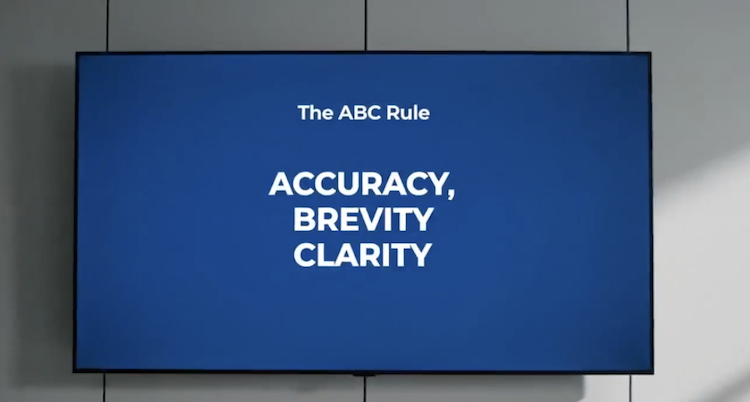
The ABC rule is the standard to hold papers against: Accuracy, Brevity, and Clarity. Every paper should state its purpose in the first paragraph. If a director reads only that first paragraph, they should know what the paper is about, why it is at the board now, and what they are being asked to do—approve, discuss, or note.
Poor Board Papers vs Good Board Papers
| Dimension | Poor Board Papers | Good Board Papers |
|---|---|---|
| Framing | Activity updates, historical narrative, compliance checklists | Decision-focused, strategy-anchored, forward-looking |
| Length | 15+ pages, often 30–60 pages per item | 3–4 pages, including cover sheet and summary |
| Distribution Timing | 24 hours before meeting or during the meeting | 5–7 days in advance, minimum |
| Content Focus | What happened, compliance detail, operational minutiae | Strategy, People, Finance (SPF 50 rule), plus “So What” and “Now What” |
| Presentation Detail | 500-line budget, full operational reports, glossy summaries | 15-line budget, executive summary, clear recommendations |
| Information Filtering | Curated to highlight wins, risks minimised or hidden | Transparent, includes bad news alongside good, shows risk mitigation plans |
| Decision Clarity | Unclear what is being requested; directors guess at intent | First paragraph states purpose, recommendation, and action requested |
| Board Meeting Impact | Directors unprepared, spend first hour catching up, strategic decisions rushed | Directors arrive ready, focused discussion, quality decisions emerge |
Building the Right Paper, One Step at a Time
For major or contentious decisions, drop the idea of presenting everything at once. Corporate governance expert Dr. Peter Crow describes a board evaluating a capital project worth 10% of gross revenue. A deadline of July made the decision unavoidable. Management began the process in January, not with a massive dossier, but with a single one-page paper linking the issue to the organisation’s strategy.
Over six months, they fed the board incremental updates. Directors had time to ask questions, reflect, and get comfortable with the scale of the decision. Crow’s conclusion was direct. Had management dropped the full proposal in a single meeting, “there would have been blood on the floor.”
That incremental approach is especially relevant for emerging risks. Boards governing AI adoption, cybersecurity exposure, or major capital decisions need papers that build understanding progressively. Broad generalisations do not help. Specific inventories, risk translations, and clear options do.
Good papers also use what is sometimes called the Pyramid Principle: lead with the main point, follow with the essential reasoning, and place supporting detail in appendices. It respects the board’s time and generates focused discussion rather than a deep dive into evidence the board has not asked for.
What This Means for Your Board
The standard is not complicated, but it is demanding. Papers should be three to four pages in length. Sentences should average 15 to 20 words. Sans-serif fonts, at least 12 point. Distributed at least five to seven days in advance. Built around decision points rather than activity logs.
Every paper should have a cover sheet. That cover sheet should state what is being requested, include an executive summary, name the preferred recommendation, and record who has previously reviewed the document.
Boards that receive papers built to this standard spend less time in the weeds. They spend more time on strategy, risk, and the future. That is where a board’s value lives.
Is Your Board Getting the Papers It Deserves?
Most executive teams have never had an independent perspective on their board paper quality. They prepare what has always been prepared. The board receives what it has always received. And the meeting produces what it has always produced.
That cycle can change. Working with an experienced advisor, executive teams can build board papers that drive genuine governance—not just compliance. Boards can shift from passive reviewers to active strategic partners.
If you lead a B2B business and want sharper governance, clearer board papers, and an independent voice at the table, reach out directly.
Director’s FAQ: Board Papers
How long should a good board paper be?
Three to four pages, including a cover sheet. That is the proven standard. A cover sheet states what is being requested, includes an executive summary, and names the preferred recommendation. The body delivers the essential reasoning, context, and options. Supporting detail goes in the appendix. If your papers regularly run longer than four pages, the problem is usually framing, not substance. You are including activity that should be filtered out.
When should board papers be distributed to directors?
At least five to seven days before the meeting. The PREP method requires time: Preview, Read in detail, Establish questions, Pick priorities. This cannot happen if directors receive papers 24 hours before they sit down. One to two weeks is ideal. That timeframe allows directors to reflect, prepare their questions, and arrive ready to engage at the strategic level rather than scrambling for context.
How much operational detail should board papers include?
Far less than you probably think. A classic mistake is burying strategic decisions under layers of operational data. A 500-line budget invites directors to argue over office supplies instead of capital allocation. Condense operational data to 15 lines with broad categories. Give the board a view of resource deployment effectiveness. Granular operational reports belong in management packs, not the boardroom. The board’s job is to govern; it is not to audit every line item.
What should a board paper’s structure be?
Start with a cover sheet that states the purpose, recommendation, and action requested (approve, discuss, note). Follow with an executive summary that a director could understand if they read only that section. Then build the case using the Pyramid Principle: lead with the main point, follow with essential reasoning, and place supporting detail in appendices. Every section should answer the “So What” and “Now What”—not just the “What.” The first paragraph of the paper itself should tell the reader why this item is at the board now.
How should financial information be presented in board papers?
With brutal simplicity. A board needs to see whether capital is deployed effectively and whether financial performance tracks the strategy. That rarely requires more than a high-level view: revenue, gross margin, operating profit, and cash position. Detailed operational budgets, line-by-line variance analysis, and granular departmental breakdowns belong in appendices or separate management reporting. A 15-line summary of financial performance focuses the board on the decisions that matter. Everything else is noise.
This article was originally published on LinkedIn.
View the original discussion here.